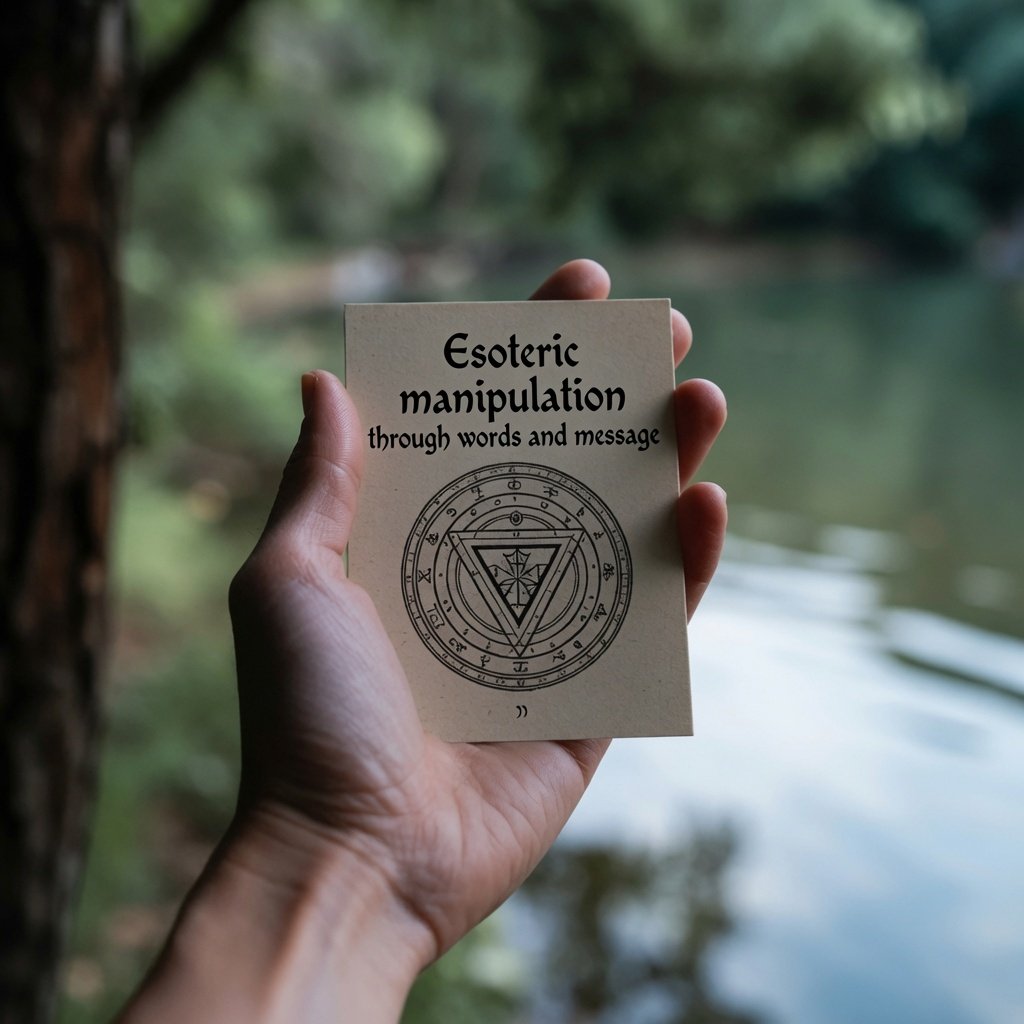
Sometimes, in conversation with loved ones, we reach levels of intimacy and directness that seem to transcend all barriers. The deeper the acquaintance, the more natural questions become that would be unimaginable to strangers. It’s worse when a stranger enters this realm, invading the space belonging to loved ones—it’s as if a stranger had broken into your intimate garden. Even worse when someone, confidently believing in their own projections and fantasies, places them on our shoulders like heavy baggage. Then we are often left in consternation, unsure whether to laugh or cry—or perhaps this is just another, sophisticated form of manipulation, a subtle attempt to establish boundaries that we don’t even fully understand ourselves? It varies… Let’s consider the following example.
Letters:
You have much to forgive me for from our past lives. On my part, I apologize.
Ask about your own incarnations. Just try not to get too emotional about what you will see or feel. You teach others to open themselves up to the new—so get to work. Once you’ve checked this out, let me know. Good luck.
Setting aside the childishness of such suggestions—pointing things out in someone, imposing what they should do, where they should look into, what they should release, or what they carry within themselves—is always a form of a dark manipulation. The body instinctively seeks to defend itself, and the ego strives desperately to prove itself right; yet, we should never take such suggestions, letters, or remarks personally. The key lies in shifting one’s perspective and asking: “Why is this person writing this to me?” or “What do they hope to gain with this post?” It is not always an attack or an attempt to dominate; it may simply be a clumsy pickup, a way of testing what the other person will tolerate—a probing of boundaries, a covert test of possibilities.
It is worth remembering that behind every such form of communication lies a motivation—often complex and not entirely obvious even to the sender themselves. Frequently, individuals who employ these techniques do not realize just how manipulative their behavior actually is. It may be an attempt to establish a sense of control, a way to compensate for their own perceived deficiencies, or a projection of their own fears and frustrations. Recognizing what lies beneath this apparent „helpfulness” allows us to maintain a healthy distance and avoid being drawn into toxic relationships. Let us remember to exercise healthy skepticism and safeguard our personal boundaries—these are our best tools for self-protection.
In this short letter, we find: gaslighting, role reversal, projection, and the attempt to pull someone into a specific narrative. Let’s take a look:
1. Reversal of victim and executioner roles—I quote: “You have much to forgive me for from our past lives. On my part, I apologize.” The sender begins by suggesting that it is the recipient who has something to forgive, thereby diverting attention away from their own mistakes. This constitutes classic victim-blaming: rather than focusing on their own faults, the sender shifts the responsibility onto past lives—which is both abstract and difficult to verify.
The phrase—and again, I quote—“On my part, I apologize,” is conditional and minimal in nature; consequently, it comes across as a mere formality rather than an expression of sincere remorse.
The purpose of this statement? It may serve to induce guilt in the recipient by implying that the conflict is mutual—or, indeed, that the fault lies predominantly with the recipient. This tactic undermines the recipient’s negotiating position, rendering them more susceptible to further manipulation. The result? The recipient may begin to question their own memories or feelings, thinking: “Perhaps I do actually have something on my conscience.”
2. Drawing the recipient into an esoteric narrative—and I quote: “Ask about your own incarnations.”
The sender instructs the recipient to take a specific action (to inquire about their past lives), which comes across as a command disguised as advice. This reference to past lives presupposes a shared belief in reincarnation—an assumption that may be entirely unfounded if the other party does not subscribe to such beliefs. This constitutes a framing technique, whereby the sender imposes their own perspective on reality.
The purpose of this statement? To draw the recipient into a process that can be controlled by the sender (for instance, if the sender positions themselves as an expert on past lives). This can pave the way for further manipulation—such as interpreting the recipient’s past lives in a manner that serves the sender’s interests. The outcome? The recipient may feel pressured to “prove” their open-mindedness, a dynamic that can ultimately erode their personal boundaries.
3. Gaslighting and Emotional Control—I quote: “Just try not to get too emotional about what you will see or feel.”
This serves as a direct warning against expressing emotion; the sender preemptively dictates the appropriate reaction and devalues it in advance. It constitutes a form of gaslighting: by implying that an emotional response is inappropriate or exaggerated, it undermines the recipient’s trust in their own feelings. It sounds patronizing—much like lecturing a child.
The purpose of this statement? To prevent the conflict from escalating on the recipient’s terms. Should the recipient react emotionally, the sender can retort, “I did warn you, after all,” thereby reinforcing their own position. The result? The recipient may suppress their natural reactions, leading to internal conflict and increased susceptibility to manipulation.
4. Using the recipient’s own words against them—I quote: “You teach others to open themselves up to the new—so get to work.”
The sender appeals to the recipient’s values or teachings—a technique known as mirroring—by reflecting the recipient’s words back at them to use as an argument. This makes a refusal sound like hypocrisy.
The purpose of the statement? To evoke a sense of obligation or consistency. The recipient thinks: “If I teach this myself, I have to do it,” which compels them to act in accordance with the sender’s wishes. The result? It creates cognitive dissonance, thereby undermining resistance.
5. Feigned empathy and the closing—I quote: “Once you’ve checked this out, let me know. Good luck.”
The letter concludes on a positive note, offering a wish of good luck; this stands in stark contrast to the preceding elements and creates an illusion of genuine concern. This technique is a miniature version of love bombing. It adds a warm touch intended to soften the overall impression. At the same time, it solicits a response—specifically, “let me know”—thereby maintaining contact strictly on the sender’s terms.
The purpose of this sentence? To encourage the continuation of the conversation without obligating the sender to take any further steps. This leaves the door open for further manipulation. The result? The recipient may experience a sense of relief or hope, while overlooking the red flags.
The letter lacks specifics and details, allowing for flexible interpretation. The entire tone is paternalistic: the sender positions themselves as a mentor, and the recipient as a student. The manipulative tactics employed are a blend of approaches—some overt (direct commands), others covert (role reversal).
Many Cleopatras and Napoleons
Let us return to the subject of incarnations—to past lives. Regressive methods—specifically past-life regression—can sometimes lead us too far, revealing scenes and emotions for which we were not prepared. Without adequate psychological and emotional preparation, such narratives begin to impinge upon the present. But what tangible influence do previous incarnations—our past lives—actually exert upon us? And what impact do the incarnations of others—their emotions and experiences—have on us? Is it not often the case that we force the issue, attempting to unearth the root of a problem in the past when the solution actually lies in the present moment? For when we truly let go of these imaginings, the present moment suddenly reveals itself to be—quite alright. And if that is the case, then what is the point of this quest? Why allow it to consume our time and energy?
One can approach this differently—more consciously. Instead of digging into the past, let us ask our own soul—and I mean *our own* soul, not that of a spiritual guide, for it is our soul that knows the truth: „Which science fiction book, TV series, or anime would allow me to work through a specific behavioral pattern or a past incarnation within me?” Beyond mere entertainment, we gain something more profound: we observe social structures, various conflicting groups, and subplots; and, above all, we analyze how others behave and react. We transcend our ego—our sense of „I” and „me”—and learn about ourselves through our interactions with others, all within the safe confines of fiction. Sessions exploring past incarnations can sometimes cause the psyche to become intensely „fixated” on the past—potentially even leading to states resembling possession—and an unprepared body may struggle to cope with the experience. Yet, in any genuine work on yourself, the paramount focus must remain on oneself—on one’s own healing and the expansion of one’s consciousness—rather than on what was allegedly done to us in the past; for we are meant to be the remedy; we are the ones who let go of everything around us.
Unfortunately, here on Earth, we face yet another complex factor. Many patterns and programs are not truly our own; rather, they are uploaded as pre-packaged files, templates, or sometimes even archetypes. This phenomenon—which I frequently observe while ushering the deceased—involves the spirit being compelled to leave behind its own repetitive patterns within the planetary grid and the ancestral field. Some individuals—whether consciously or unconsciously—go so far as to allow themselves to be copied, permitting their patterns to be cloned. Subsequently, another soul—often a younger one, or one that was given a karmic assignment—downloads these ready-made memories and these pre-loaded incarnations.
All of this is compounded by yet another problem we identified within a specific regression therapy method: a vast astral plane associated with that method literally injected foreign emotions, narratives, and characters—with which the clients subsequently identified—directly into the practitioners.
These two types of influence—authentic experiences from past lives and pre-loaded patterns—form a mixture that generates illusion and falsehood. This is why establishing contact with one’s own soul is so crucial: it is the soul that verifies what is genuine and what is artificial—what has been merely grafted on and does not serve our authentic evolution.
Round Two
I cleansed myself with the power of the Source. The Source even cleansed your heart; furthermore, I found a fragment of your soul. I apologize for doing so without asking, but the Source had a plan.
1. Imposing a spiritual narrative and projection—I quote: “I cleansed myself with the power of the Source. The Source even cleansed your heart; furthermore, I found a fragment of your soul.”
The sender describes their own actions (in this case: cleansing) as positive and spiritual, and then extends this to the recipient: “the Source cleansed your heart” and “I found a fragment of your soul.” This is a projection—the sender attributes to the recipient experiences that the latter may not have actually undergone.
The “Source” itself is personified, rendering the narrative abstract and difficult to refute. This draws the recipient into an esoteric framework in which the sender acts as the active participant—performing the cleansing and making discoveries—while the recipient remains passive, their heart having been cleansed without any conscious awareness of the process taking place.
The purpose of the statement: To foster dependency. The recipient may come to feel that the sender is providing them with spiritual assistance, thereby creating a debt of gratitude. If the recipient perceives no actual changes, they may begin to question their own perception (a form of gaslighting). The outcome? The recipient may eventually come to believe in this narrative—particularly if they are susceptible to suggestion—which ultimately undermines their autonomy.
From a spiritual perspective: In which density does this “Source” reside? Does the mere reference to a “Source” automatically imply that the process is being conducted through the medium of love? And does love possess the capacity to transcend boundaries and exert influence over another person’s free will?
2. Minimizing boundary violations and offering justification—and I quote: “I apologize for doing so without asking, but the Source had a plan.”
The apology is merely perfunctory: “I apologize for doing so without asking” acknowledges the violation (acting without consent), yet immediately justifies it by invoking a higher power—specifically, that “the Source had a plan.” This is an appeal to higher authority—a technique involving the shifting of responsibility onto something abstract, thereby rendering any discussion impossible. The apology sounds like a mere formality rather than an expression of genuine remorse, which serves to minimize the gravity of the action taken. The phrase “finding a fragment of the soul” could be interpreted as a metaphor for an intrusion into one’s emotional privacy.
The purpose of this statement? To evade consequences. Should the recipient feel violated, the sender can simply retort, “It wasn’t me; it was the Source’s plan”—a maneuver that diverts attention away from their own role in the matter. Furthermore, this tactic reinforces the sender’s self-image as a medium or a chosen one, thereby endowing them with a sense of power. The result? The recipient may come to accept the violation, reasoning: “If this is the plan of a higher power, perhaps I have no right to object”—a mindset that ultimately erodes their personal boundaries.
From a spiritual perspective: I do not trust you; I do not know you. I do, however, know myself—and I place far greater trust in myself than in your insights, visions, or the information you purport to derive from them.
I have been working with people for over twenty years. It was only when I embarked upon a spiritual and esoteric path that I began to experience frustration regarding the use of overly abstract language—expressions that served to mask the true root of a problem. These terms were often associated with phenomena that find no reflection in classical and academic knowledge, but only in a magical abstraction. On occasion, an accumulation of such generalizations not only failed to lead to a resolution but actually exacerbated the problem, making it difficult to identify its very core. A boundary emerged that was difficult to discern: was this a genuine insight or intuition, or perhaps a psychological disturbance? It was precisely these experiences that prompted me to adopt an approach that integrates classical methodologies with spiritual understanding.
A particularly critical aspect we must confront—especially when working with individuals who have experienced spiritual abuse—is the fact that esotericism and spirituality can, at times, serve as tools for emotional manipulation. We observe this phenomenon widely within the New Age movement, where subtle techniques of persuasion and promises of rapid spiritual growth are employed to gain power and influence. This demands that we, as professionals, exercise exceptional caution and maintain a critical perspective regarding the language and narratives that circulate within the spiritual sphere.
In the process of spiritual development, one cannot rely solely on what is seen—on the quality of clairvoyant experiences—for it is all too easy to fall into the trap of self-delusion. The key lies in constantly subjecting everything we experience to critical scrutiny—challenging and questioning it, regardless of the form it takes: sensory, visual, or verbal. For if we uncritically swallow everything that appears luminous and colorful, we become vulnerable to manipulation and disinformation. Even if a message originates from a spiritual guide, an archangel, a voice from the heavens, or a psychic, what truly matters is our own discernment and verification—not blind, automatic acceptance. The fundamental approach becomes treating all incoming concepts as hypotheses requiring empirical confirmation, rather than faith.
In the context of letters discussing the recovery of lost soul fragments, another issue arises. What happens to the recipient’s subtle nature—to their very soul—after receiving such a message? Is there not a risk that the soul might suddenly rush toward it—like a moth to a flame—in search of these alleged fragments? The sender’s soul may indeed release these fragments; yet, are they truly authentic, or have they undergone thousands of modifications, layers of programming, and filtration processes? And what happens if someone unwittingly absorbs these fragments—much as one might absorb a virus? How many times have we experienced a high-vibrational energy from an external source, only to discover that, deep within, it concealed thousands of embedded programs and hidden energetic seals? Attempts at such „reintegration” are illusory; everything we experience ultimately remains within us. Energetic recovery is indeed possible—yet it is achieved not through artificial merging, but through a subtle process of transformation, reprogramming, and subtle reconstruction.
I had an insight—and my friends confirmed it: our souls are one. At the moment of creation, they were a single soul that decided to split into two, in order to experience life twofold. These are the so-called twin souls. Situated between the solar plexus chakra and the heart chakra lies a „twin chakra,” which connects twin souls. People speak of its phenomenon. Talk to your soul about it, for I could be mistaken.
1. An appeal to external validation—I quote: “I had an insight, and my friends confirmed it: our souls are one.”
The sender begins with an insight (which sounds like a personal revelation) but immediately reinforces it with confirmation from friends—an appeal to social authority, or social proof. These friends remain anonymous and unspecified, rendering the claim unverifiable. The suggestion that “our souls are one” imposes an intimate bond without the recipient’s consent—a form of projection.
The purpose of this statement? To bolster the narrative’s credibility; the recipient might think: “If others have confirmed this, it must be true.” This reduces skepticism and builds trust in the sender as a spiritual authority. The outcome? All of this creates pressure to conform; the recipient feels isolated if they do not align with the group.
2. Imposing a mythological narrative—and I quote: “At the moment of creation, they were a single soul that decided to split into two, in order to experience life twofold. These are the so-called twin souls.”
The sender presents a complex origin story for souls as if it were fact, employing mythological language (creation, the splitting of the soul). The concept of twin souls—or twin flames—is popular within esoteric circles; here, however, it serves to suggest a destined, unbreakable bond. This is framing: the sender frames the relationship as cosmic and inevitable—a tactic that may serve to mask toxic elements (such as obsession or controlling behavior).
The purpose of this statement? Emotional bonding with the recipient — the concept of “experiencing life twofold” suggests that separation is unnatural, which may induce feelings of guilt regarding the distance. The result? The recipient may internalize this narrative, leading them to idealize the relationship and overlook its actual problems.
3. Introduction of pseudoscientific details—I quote: “Situated between the solar plexus chakra and the heart chakra lies a “twin chakra,” which connects twin souls. People speak of its phenomenon.”
The reference to chakras (an energy system derived from Eastern traditions) is conflated with an invented “twin chakra”—this constitutes pseudoscience, presented as common knowledge, yet supported only by the claim—I quote: “People speak of its phenomenon.” This appeal to collective wisdom is vague and undefined, rendering it an empty authority. It employs the bandwagon effect technique—suggesting that because something is widely discussed, it must be true.
The purpose of this statement? To add a veneer of scientific credibility to the narrative, thereby making it more persuasive to individuals open to esoteric concepts. It reinforces the idea of a connection at the energetic level—a concept that can be exploited to rationalize emotional manipulation (e.g., “You feel this because we are connected”). The result? The recipient may begin to search for corresponding symptoms within themselves, thereby deepening their emotional investment and perpetuating self-delusion.
4. Pressure to act with feigned humility—I quote: “Talk to your soul about it, for I could be mistaken.”
The repeated command serves as a continuation of drawing the recipient deeper into the process (much like the earlier instruction to „ask about past lives”). The addendum—”for I could be mistaken”—is a form of false humility; while intended to soften the imperative, it rings hollow following a series of strong affirmations. It is gaslighting in disguise— suggesting that the recipient should verify matters for themselves, yet strictly within the confines of the imposed narrative.
The purpose of this sentence? To shift the burden of responsibility onto the recipient: if they fail to „engage in dialogue,” they are cast as being closed; conversely, if they offer confirmation, they reinforce the sender’s narrative. This strategy maintains both contact and control. The result? It induces cognitive dissonance; the recipient feels pressured to act, while a refusal can be perceived as a lack of openness.
The challenge lies in the fact that subsequent sentences—and subsequent messages—escalate in intensity. This is not a natural, organic evolution, but rather a construction of increasingly potent, „cosmic” bonds—thereby forging a narrative of dependency. The entire dynamic mirrors that often observed in esoteric groups, New Age circles, and relationships characterized by elements of spiritual narcissism—settings where abstract concepts and specialized jargon serve as tools for emotional control and for maintaining a facade of profound intimacy. Intentions, commands, and projections become increasingly direct—without subtlety or concealment. The sender imposes a narrative that leaves no room for doubt, for independent judgment, or for critical analysis. This process resembles a construction of an illusion in which the recipient becomes dependent upon the sender—reliant on their interpretations and their vision. It is a closed loop that stifles personal growth, precludes genuine self-discovery, and creates the ideal conditions for manipulation and spiritual abuse.
Conclusion
The letter we have analyzed serves as a symptom of the consequences of contemporary consumerist spirituality, esotericism, and the New Age movement. Much is said, much is dreamed of, much is believed; the wisdom of others is parroted—and my own words, quotes, and statements are even appropriated to construct elaborate narratives around them. Regrettably, within these narratives, one is far more likely to find an escape from life itself than any genuine support for navigating the difficulties of daily existence. Spirituality—as demonstrated by both my theoretical analysis and my practical experience of working with people—is rooted in the „here and now,” in reality, and in the active engagement with the problems that directly affect us. A healthy psychological attitude is inextricably linked to a healthy spiritual attitude. Practice is what we are interested in; that is why many people who worked directly with me experienced the tangibility of what was taking place—the sense that what we said and did had a real impact on their lives. Everything else consists of hypotheses that can only be validated and verified through practice.
In my book, Beyond Duality—specifically in the chapter titled “How Souls Are Held in Samsara and the Burdens of a Prophet”—I present a situation very similar to the one we have analyzed; in this instance, however, it is viewed from the perspective of a well-known media personality. The very same language of narrative and manipulation—along with the identical dynamics of dependency—unfortunately entailed serious consequences for their audience. A powerful force of the principle of authority came into play, along with the influence of one soul upon the soul of the client.
In the face of the contemporary spiritual industry, it becomes crucial to develop practical strategies that help us distinguish authentic support from manipulation. Critically questioning the content we receive, focusing on practical tools, and—above all—trusting our own intuition and inner compass constitute the foundation of healthy growth. Let our spiritual quests be directed toward real challenges and toward building solid foundations for a life filled with authenticity and inner peace. Let us remember that true understanding comes through action, not through the passive absorption of ideas.
How many people have been taken in by promises of harmonization with a close soul? How many have been drawn into the narrative of a twin flame or a spiritual family? Even if these connections did not reflect the truth, the experience itself—along with the patterns emerging from it—points to our deep-seated needs: to what we seek and what we flee from—our age-old yearning for connection, acceptance, and meaning.
This intensified, full of blind optimism wave—comprising thousands, hundreds of thousands, and even millions of people across the globe—bears good tidings: a human being will always be a seeker. Yet, in this era of New Age prophets—at a time when thousands claim to experience visions and sensations, sharing them without any verification—one must become exceptionally critical. In 2007, when I first embarked on my path, things were simpler: a spiritual marketplace did not yet exist, and worthwhile publications were the fruit of years of research and experience. It was easy to forge connections thanks to books that were profound and deeply thoughtful. Today, the situation has shifted; people are inundated with information that, while appearing sound and positive, is conveyed in a manner that leaves no room for rest, reflection, or verification.
Let us not allow this ceaseless chase and constant searching to exhaust us just as we finally discover true gold—that diamond of knowledge which fosters growth and illuminates. Many have yet to begin their journey of self-development and the cultivation of a consciousness capable of discernment. Is this their karma? We do not know. We do know, however, that if we seek, we shall find. If we are ready, the path will open before us. Study diligently—with openness, yet also with a critical mind, ever mindful of pitfalls and illusions. For only then will you be able to distinguish authentic guidance from empty promises and discover the true path back to yourself.
Nikodem Marszałek
2018 / 2026