At the turn of 2007 and 2008 I wrote, quote:
“The Renaissance brought further medical and scientific discoveries, including the well-known topic of electromagnetism and the functioning of the nervous system. Franz Anton Mesmer, drawing on these new developments, published his own work on „animal magnetism,” adding an element known in India as linga sharira. The term „astral body” was used by medieval alchemists to refer to „traversing the stellar regions.” The body itself was considered the alchemist’s „philosopher’s stone” or „living stone.” Paul also mentions this body in his First Letter to the Corinthians (though indirectly). In the Kabbalistic Tree of Life, the sephirah Hod (i.e., the astral body) is considered a part of the human soul, linked to animal emotions, passions, and desires. Analogies between the concept of the astral world and the unconscious mind were noted by Sigmund Freud, who replaced the awareness of the mesmeric animal self, the value of hypnosis, trance, and sleep, and life energy with a purely psychological paradigm: libido, consciousness, and the subconscious mind. Later, Wilhelm Reich attempted to utilize „vitalist” theory and experiments to reinstate the concept of life energy (the etheric body). Carl Jung himself, in discovering the dynamics and symbols of memory, dreams, and religious initiation, drew on alchemy and ancient patterns. He viewed astral travel as a paradigm for the search for the human soul, describing the collective unconscious shaped by archetypes and the symbolic language of visions and dreams.”
„In ancient times, philosophers (e.g., Democritus) believed that there was a special kind of atom responsible for the existence of the soul and all intellectual and psychological phenomena. According to Epicurus, however, these atoms did not differ qualitatively from others, except for being exceptionally light and mobile. The philosopher further believed that the human body was permeated with these atoms everywhere, although their main concentration was in the head, heart, and senses. Under such assumptions, death was simply the disintegration of the body’s atoms and their release into the environment, where they could mix with other atoms and, at some point, create new life again. This also applied to the atoms of the soul. The latter, being the lightest and most mobile, disperse most quickly, and therefore a person need not fear death. According to Epicurus, if a person is still alive, they cannot feel the act of dying itself, and after death, they no longer exist and, consequently, feel nothing. Thus, no one has the chance to experience their death as suffering. With this consideration, Epicurus sought to allay the fear of death. The encyclopedic definition of the soul itself is: „The ephemeral substance in a human or animal, the breath that gives it human characteristics and makes it live.”1 The etymology of the word „soul” refers in many cultures to breath—the breath of life.”
- The Slavs believed in the Spirit, dividing it into two parts: „the soul of the self and thoughts” — the consciousness of one’s own thinking (the head was considered its seat), „the soul of life, breath” — determining the state of the life force (the heart and belly were considered its seat).
- Plato, citing Socrates, said: „The soul is the essence of a person, the part that determines our behavior.” He viewed this essence as the disembodied inhabitant of our being. He stated that a person is a soul imprisoned in a body. Plato divided the soul into three parts: Logos (reason, rational), Thumos (spirit, emotion) and Epithumia (appetite, desire). All of these have their place in a peaceful soul. If we were to combine Western thought with Eastern knowledge today, we would see: reason—the mental body, appetite and spirit—the astral body.
- Aristotle, in turn, defined the soul as an activity of the body. For example, „If a knife had a soul, the act of cutting would be its soul—for cutting is the essence of being a knife.” The soul is the „primordial activity” of a living body.
- Hinduism presents the soul as the atman—the individual self present in every human being. The atman incarnates in successive lives into successive bodies, subject to the law of karma.
- In Buddhism it is customary to speak of the primary inner particle as „habitual forces, tendencies, guided by the law of cause and effect.”
- Judaism has its own nephesh chayyah, meaning „living soul.” The word ruah, on the other hand, is translated as „spirit.” Death is the loss of the spirit, not the soul; what happens to the soul is unknown. The Sadducees, representing the oldest views of Judaism, were materialists who did not recognize an immaterial soul or life after death. The Pharisees believed in the soul, but according to them, souls also existed before birth and were subject to reincarnation, but could also be condemned: „Nephesh (neck, throat)—human, animal, or vegetative soul,” „Ruah (wind)—the soul as ethical principles, emotions, and will,” „Neshamah—spiritual intelligence.”2
- Catholicism — St. Paul gave the word pneuma the meaning of „a supernatural spirit operating in the human heart,” hence the concept of body (soma), soul (psyche), and spirit (pneuma), received only through baptism. In his treatise on the soul, St. Augustine wrote: „The soul is incorporeal, but it is not a void. It stands higher than the body in the hierarchy, so the soul contains the body, not the body the soul.” He was convinced that the soul has eyes, a tongue, limbs, and is a kind of incorporeal reflection of the body.
- Jehovah’s Witnesses, members of the Seventh-day Adventist Church, consider the human soul to be mortal, bound to the body.
- Most religions (Catholicism, Orthodox Christianity, and Protestantism) have accepted the concept of an immortal human soul. After death, there will be a Last Judgment and a resurrection of the righteous.
- Islam — the soul is immortal, and after the Last Judgment it will be united with the body to go to paradise or hell.
The interest in the soul, even in the context of her species and kinds, at that time was somewhat reminiscent of Sigmund Freud’s early journey with his theory of the unconscious and psychoanalysis in academia. His theses, reshaping the image of man and the self, were met with resistance and rejected because they challenged the existing paradigm. Today, we encounter similar resistance when discussing the soul and her desires. In many studies, we focus instead on what the ego (often identified with the subconscious) desires—that is, the self as an individual. The soul is not discussed because we do not treat our inner self as an essence, but as a set of mechanisms to be analyzed. We often hear: „I am developing,” „My world is to be subordinate to me.” This kind of thinking fuels the myth of the primacy of the personal self. This is why Buddhism and Sufi teachings place such strong emphasis on dissolving the ego, on recognizing its illusory nature.
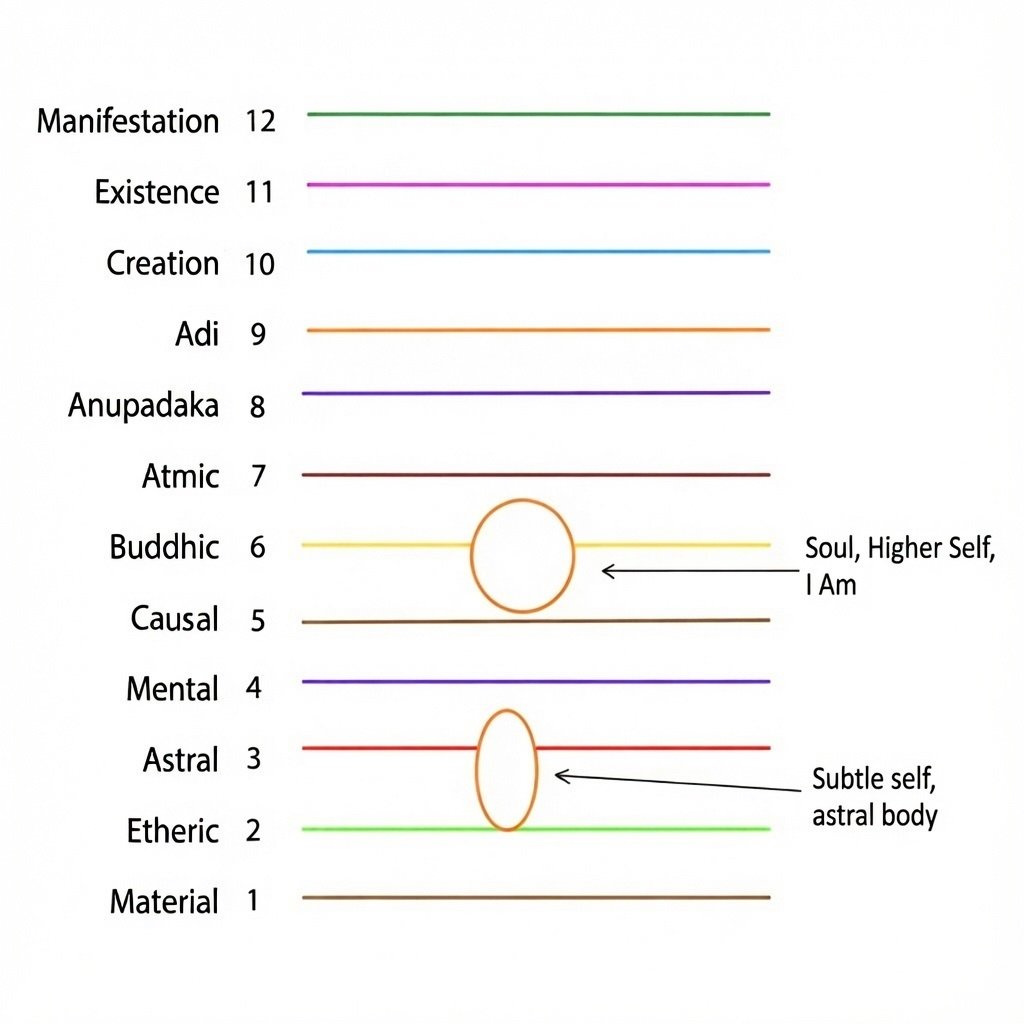
First, during subtle work, I search for the person’s subtle body. I utilize the unique energy patterns each of us emits—I scan densities, looking for what vibrates in harmony with a given being. I verify whether I’m dealing with someone I can connect with. I examine their origin, species, and core. Then I engage the astral body to deepen the interaction.
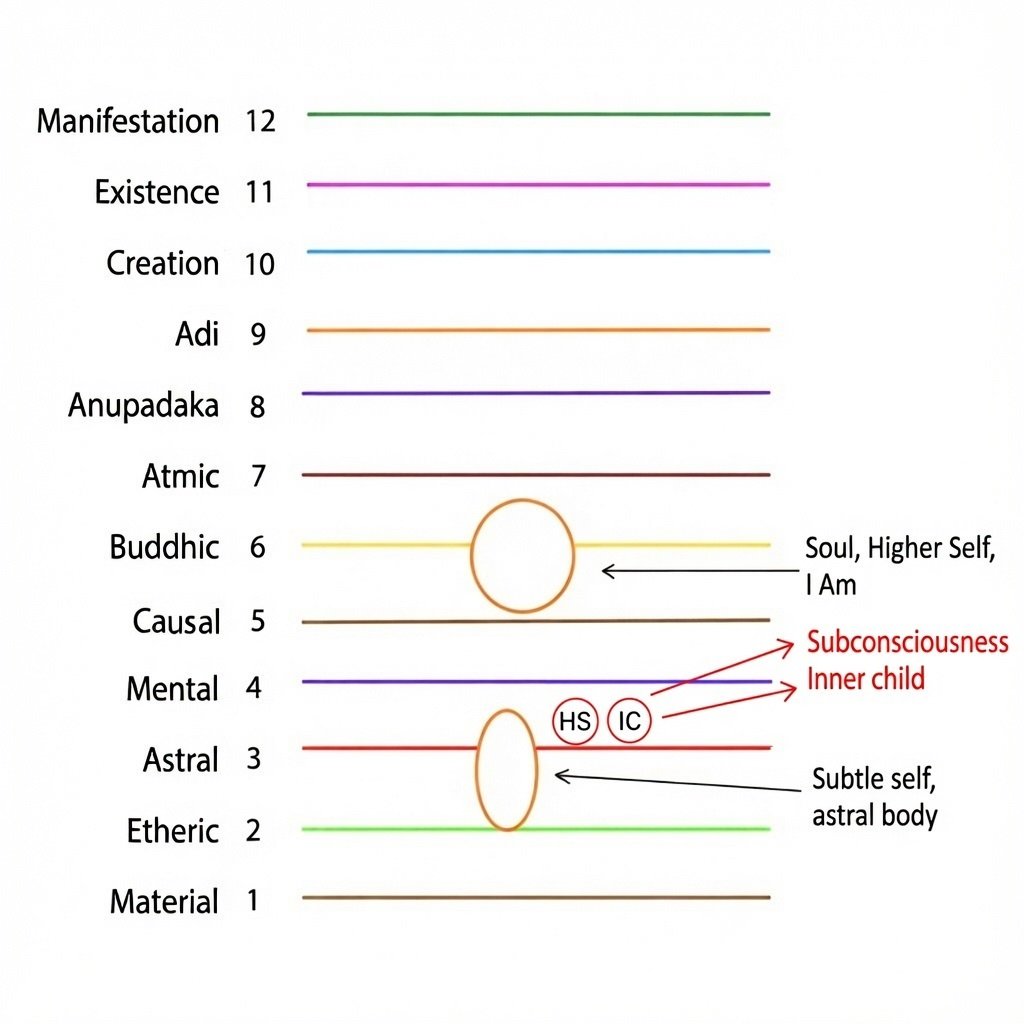
A person longs to connect with their soul, but often a trauma charge vibrates within their space—in the form of an inner child (IC) or a bundle of subconscious memories, karmic patterns, and emotions (the subconscious) that has been embedded in the subtle body. Sometimes it’s the soul that releases these bundles for processing. How do active bundles (the subconscious, the inner child) affect the subtle body? They generate emotional overload, condition dreams, and a strong inner child can even control a person’s behavior.
What does this mean for someone seeking to connect with their soul? A difficulty arises. Instead of communicating with their soul, a person immerses their consciousness in a subconscious package—they see a story, a meadow, a scene from a past life—and think it’s the soul sitting in the meadow, doing nothing, or wandering aimlessly through astral spaces. These are images of the subconscious, astral projections, not messages from the depths of their being. It’s no wonder that many classical therapists I work with are surprised when I see what their inner child (IC) looks like—how old it is, what it’s wearing. This demonstrates how multi-layered we are. Spiritual connections occur regardless of our faith. Most ICs vibrate on the astral or mental level.
That’s why I agree with Leszek Żądło’s suggestion to first undergo classical therapy and only then work spiritually. This approach minimizes the risk of developing narcissism, allows us to process early traumas, and reduces the burden of IC and the subconscious, which in turn refines our energies. In this way, we prepare the ground for a true, deep relationship with our own soul.
Let’s look at an example related to interferences or interferers, which greatly hinders honest work on oneself.
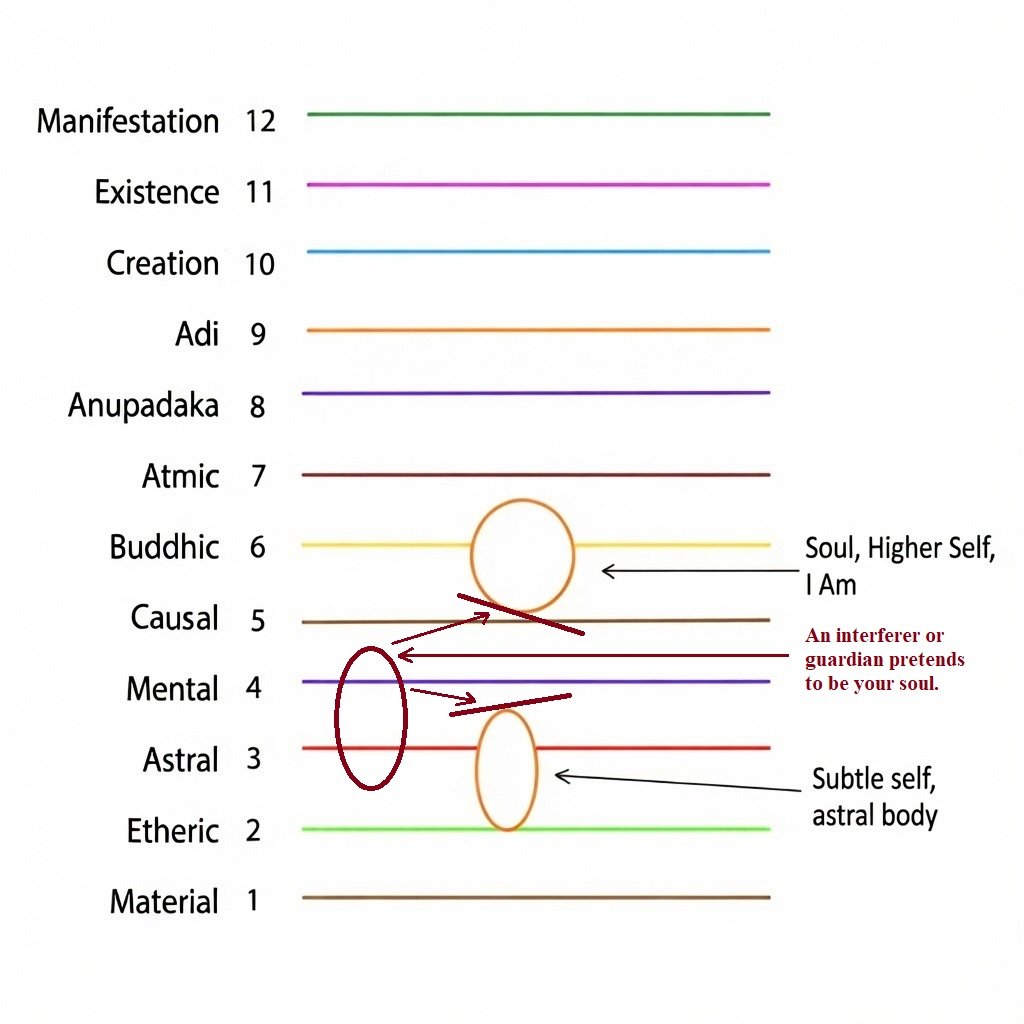
In addition to the subtle bodies of humans, entities of various origins are often present in the space around them. The most common are reptiles, grays, hybrids, and dracos. A clairvoyant, shaman, or therapist, seeking to connect with a person’s soul (and not just their subtle self), often encounters an obstacle – a prepared interferer (visible in green on our chart) impersonates a guide, scans frequencies, creating within themselves a veil of vibrations identical to the person being examined. Beings, especially reptiles, can imitate angels and archangels to facilitate access. This manipulation technique also involves posing as a guide, guardian, or higher self of the person being examined.
Often, to clairvoyants, shamans, and those in deep hypnosis, the higher densities—causal and buddhi—appear to vibrate higher and be richer in form than the lower levels (etheric, astral, mental). The beings residing there appear to be wiser and more cunning, because they have a wider range of particles and possibilities at their disposal.
Nevertheless, the basic pattern of recognition and interaction remains unchanged. This leads to a key question: If souls/higher selves are self-aware and possess immense power, why do they allow their incarnations to be cut off from them? The answer lies in the nature of the soul herself: she has her own distinct goals, issues to work through, karmic laws, burdens, and values that may conflict with the needs and understanding of the individual incarnate self. Neither the rational teachings of Descartes nor the insightful philosophies of Buddhism have been able to fully help humans grasp this inner complexity. We are left with the sense that our deepest essence is simultaneously so close and so far away—we sympathize with the loneliness of incarnation, but we understand that in the grand play of the soul, this may be a deliberate act, necessary to achieve a goal that transcends a single human perspective.
Example: The parents of a one-year-old child asked me to assess their energy field due to severe teething discomfort. It turned out that an energetic „tooth fairy” was „flying” in the etheric density, triggered by fairy tales read to the child by the parents. The fairy proved too heavy, so I commanded it to reveal its true form – a reptile, which not only placed metal overlays on the child’s teeth but also manipulated their developing subtle body, using forms accepted by his subconscious through the human language of symbols and myths.
Another example: I published several works on the subtle self, which led to several people discussing a similar topic, although interpreting it as souls. Their subtle selves appeared on the astral plane, living in the physical body. I asked my partner to verify who had arrived, which brought similar sensations. Then I contacted their souls. A dragon and an archangel appeared. In an instant, I challenged their previous beliefs. However, the subtle self’s awareness of events doesn’t necessarily translate into a change in the physical body, which is disconnected. Sometimes the subtle self isn’t ready to establish a true relationship with the body—and vice versa. This is evident in people conducting or undergoing various types of regressive and esoteric hypnosis.
This study focused on the subtle self – the foundation. In the next study, we will see practical conversations with the subtle self and the soul. I invite you to join me.
Nikodem Marszałek
2022
1 Wikipedia.
2 Wikipedia.